
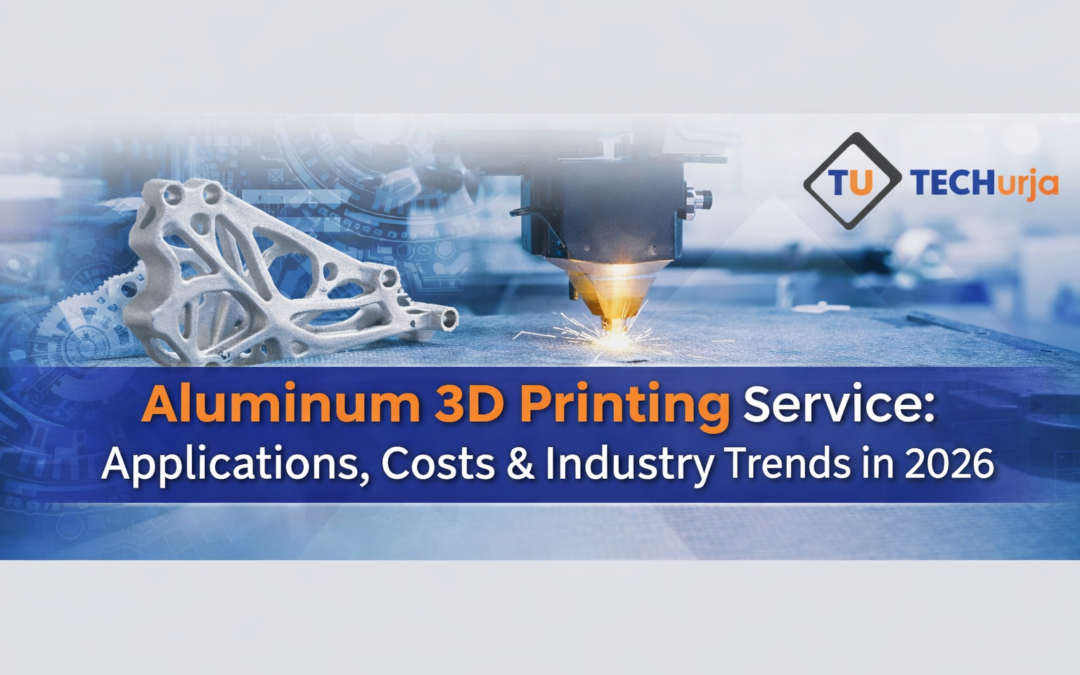
Aluminum 3D printing service has gone far from being just a prototyping niche to a major manufacturing solution that is used in various aerospace, automotive, medical, and industrial sectors. Aluminum additive manufacturing being the topic of 2026, it does not only mean design freedom, but it also means performance, speed, and supply chain resilience. More and more manufacturers are using the aluminum 3D printing technology to get in a timely manner, lightweight, high-strength parts with complex geometries, which by traditional machining or casting would be either impossible or not cost-efficient.
Aluminum alloys have thus become very popular as they provide a good combination of low density, high thermal conductivity, corrosion resistance, and attractive strength, to, weight ratios. If such materials are then manufactured by metal 3D printing and advanced technologies, such properties allow the production of fully functional pieces, tooling, and a fast iteration cycle. The demand is increasing as companies want local, on-demand production to shorten the time of supply and avoid global supply chain disruptions.
This article looks into the use of 3D printing services in actual industries, the prices you will likely see in 2026, and the principal trends driving the future of this technology. If you are an engineer, product designer, or procurement manager, getting to grips with these issues will assist you in making a decision about the time and manner in which aluminum 3D printing becomes a part of your manufacturing strategy.
What Is Aluminum 3D Printing
Aluminum 3D printing is a form of metal additive manufacturing where aluminum alloy powder or wire is built layer by layer to create parts directly from digital CAD files. The most common processes include:
- Direct Metal Laser Sintering and Selective Laser Melting
- Electron Beam Melting (EBM)
- Binder Jetting (with post-sintering)
These technologies enable the production of dense, high-performance aluminum components with internal channels, lattice structures, and optimized topologies.
Key Applications of Aluminum 3D Printing
Aerospace and Defense
The aerospace industry is still one of the biggest users of the aluminum 3D printing service. Instead of applying traditional manufacturing, lightweight brackets, housings, heat exchangers, and structural components can be produced directly by 3D printing to be lighter, and they can also benefit from part consolidation. Complex internal cooling channels, along with topology-optimized designs, optimized designs can contribute to improving the fuel efficiency and overall performance.
Electronics and Thermal Management
Aluminum, being a heat conductor par excellence, the presence of 3D printed heat sinks, enclosures, and cold plates in the electronics and power systems of the future is poised to become a common scenario. Aluminum additive manufacturing services help create more efficient airflow and cooling paths that will certainly aid in increasing the reliability of the devices.
Medical and Robotics
In the fields of medical devices and robotics, aluminum 3D printing helps create light frames, custom housings, and high-precision parts. In addition to this, the capacity for swift design iterations accelerates progress throughout the R&D and production stages.
Aluminum 3D Printing Costs in 2026
The pricing of 3D printing services varies based on a range of influencing factors.
Material Costs
Aluminum alloy powders (such as AlSi10Mg or Al6061 variants) typically cost more than raw billet material due to atomization and quality requirements. In 2026, material costs remain a significant portion of total pricing but continue to decrease as supply scales.
Machine and Processing Costs
Metal 3D printers are capital-intensive, and service pricing reflects machine time, energy use, and skilled labor. Laser-based systems are more expensive per hour but offer high precision and part density.
Post-Processing
Most Metal 3D printing aluminum parts require post-processing, including:
- Heat treatment
- Support removal
- CNC machining
- Surface finishing
These steps can account for 30–50% of the total cost, depending on tolerances and surface requirements.

Industry Trends Shaping Aluminum 3D Printing in 2026
Increased Adoption of Production Parts
A growing number of companies are no longer limiting themselves to prototyping but are instead going for full production of aluminum 3D printed parts. Higher process stability and material consistency are the factors that give more confidence to end-use applications.
Design for Additive Manufacturing (DfAM)
Rather than merely changing old-fashioned designs, engineers are coming up with designs that are suitable for additive manufacturing from the start. This fundamental change leads to aluminum parts that are lighter, stronger, and more efficient.
Faster Turnaround and Localized Manufacturing
Aluminum 3D printing service is winning over the market as companies are focusing on the factors of speed, IP protection, and supply chain security. It is becoming standard for lead times to be measured in days rather than weeks.
Sustainability and Material Efficiency
Additive manufacturing is inherently a less wasteful process than subtractive manufacturing. In 2026, the drive for sustainability is pushing manufacturers to adopt aluminum 3D printing as a means of conserving materials and cutting down on energy use.
Hybrid Manufacturing Approaches
It is becoming the norm to combine aluminum 3D printing with CNC machining. This hybrid method allows one to enjoy both the design freedom and the capability of producing parts with precise dimensions and high-quality surfaces.
Challenges to Consider
Despite its advantages, aluminum 3D printing still faces challenges:
- Higher upfront costs compared to traditional manufacturing
- Surface finish limitations without post-processing
- Design and material expertise required for optimal results
Choosing the right industrial aluminum 3D printing company is critical to overcoming these barriers.
Final thoughts
In 2026, the aluminum 3D printing service is changing the way products are designed and made. This technology presents a great solution for companies that are looking for speed, flexibility, and performance due to increasing applications, better cost efficiency, and strong adoption of the technology in different industries. Aluminum additive manufacturing is continually capable of revealing new design and production potentials, whether these are aerospace components, industrial tooling, or thermal management solutions.
If you want a dependable, 3D printing service that produces quality, speed, and expert support, then you may check us out at Tu3dPrint. We offer professional 3D printing services in aluminum that are aluminum-based and are suited to your project needs, from prototyping to production, with the precision, speed, and quality that you can rely on.
Frequently Asked Questions (FAQs)
- Is aluminum 3D printing strong enough for end-use parts?
Yes. Aluminum 3D printed parts that have been properly treated can have mechanical properties equal to those of cast or machined aluminum.
- What aluminum alloys are most commonly used in 3D printing?
The main one is AlSi10Mg, and then there are recently developed aluminum alloys for additive manufacturing.
- What level of precision can aluminum 3D printing achieve?
An aluminum 3D printed component can be highly dimensionally accurate, which is sufficient for most functional and end-use applications. In cases where the application requires tighter tolerances or better surface finishes, CNC post-machining and other finishing processes can be used to achieve higher precision.
- Is aluminum 3D printing suitable for mass production?
It is more suitable for small and medium production volumes of complex and customized parts than mass production at a high volume scale.
- What is the typical turnaround time for aluminum 3D printing solutions?
The turnaround for 3D printing aluminum parts is usually much quicker than that of traditional manufacturing methods. Delivery speed depends on factors such as part complexity, size, production volume, and any required post-processing.