
Services
Plastic 3D Printing
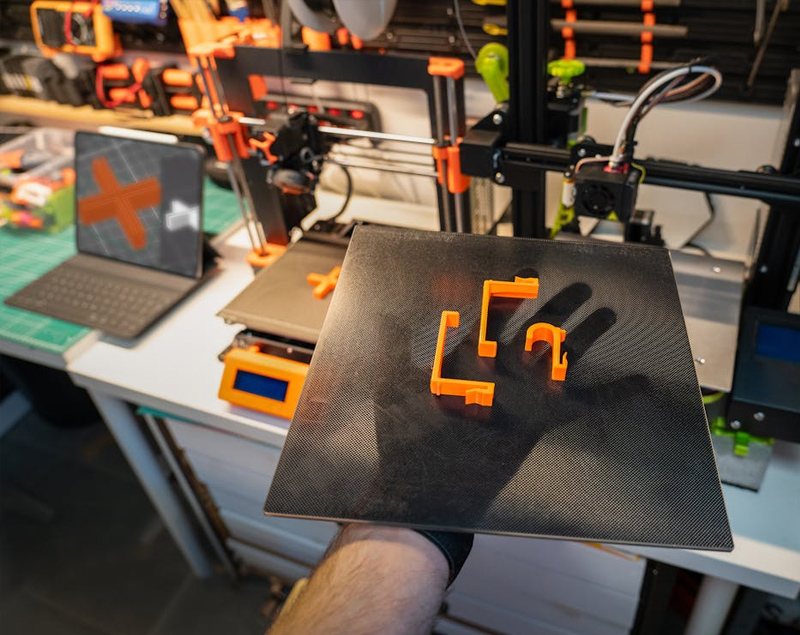
Plastic 3D printing offers a fast, flexible, and cost-effective way to produce prototypes, functional parts, and low-volume production runs. With six different printing technologies available, it caters to a wide range of design needs, material properties, and precision requirements.
From concept models to end-use components, our plastic 3D printing solutions help turn your ideas into real-world parts with speed, accuracy, and reliability.
Each technology brings unique strengths, including smooth surface finishes, fine details, and durable, engineering-grade plastics. This allows us to match the right process to your specific application and deliver the best performance and value for every project.
Plastic 3D Printing Technologies
We offer a range of plastic 3D printing technologies to suit various design goals, material needs, and functional requirements. Below are the options available based on your project specifications
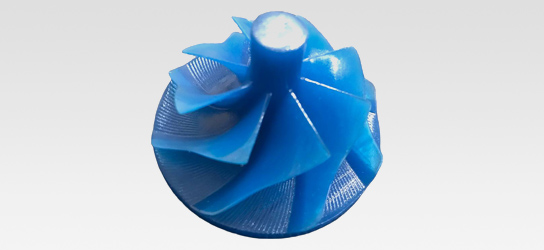
Stereolithography (SLA)
Stereolithography (SLA) is mostly considered as the most accurate plastic 3D printing method. It produces high-resolution models with smooth surface finishes and tight tolerances, making it suitable for applications requiring precision and details. It has exceptional detail & resolution — ideal for intricate parts, Smooth surface finish — almost injection-mold-like, Great for visual models & precision prototyping, Tunable resin properties — from rigid to flexible, Well-supported desktop and industrial systems
Accuracy: 0.05mm
Bed size: 250mm X 250mm X 250mm
Materials includes:
dummy
Standard SLA Resins
Standard Resin
Used for rigid, high-resolution parts with smooth surface finish The colour of resin slightly changes its properties. White resins are used for parts with smooth surface finish while grey resin good for parts with complex features.
Clear Resin
Clear resin is good for parts with complex features which requires smooth surface finish and transparency. Used in applications like LED housings.
Engineering SLA Resin
Tough Resin
Tough resins are ABS like resins which provides high degree of stress and applied force. Its properties are similar to ABS. These are used in applications like rugged prototypes or joints.
Durable Resin
Durable resins Polypropylene like resins, which are extremely resistant to wear and tear and it’s also very flexible. It’s used for rapid prototyping consumer products, low-friction moving parts, and ball joints.
Heat Resistant Resin
Heat-resistant resins have high thermal stability and the toleration of high temperatures. Specifically, heat-resistant resins provide a heat deflection temperatures between 200–300°C. This property makes them excellent options for mold prototypes, hot fluid flow equipment, heat-resistant fixtures, and casting and thermoforming tooling.
Flexible Resin
Flexible resin enables product and part engineers to mimic rubber parts.. Moreover, flexible resins are great for to applications such as stamps, packaging, handles, wearable prototyping, grips, and overmolds.
Rigid Ceramic-Filled Resin
These resins are reinforced with ceramic particles such as glass, which produces a high degree of rigidity and smooth surfaces in the prints. Plus, rigid resins offer thermal stability and heat resistance. Rrigid ceramic-filled resins are great for applications such as jigs, molds and tooling, fixtures, manifolds, and housings for automotive and electrical components.
Dental and Medical SLA Resins
Class I Biocompatible: Custom Medical Appliances Resin.
Class I biocompatible resins can withstand sterilization from an autoclave, which allows them to be utilized in medical operating rooms. These resins offer a high degree of precision and smooth surface finishes, which makes them great for surgical applications.
Class II Biocompatible: Dental Long-Term Biocompatible Resin.
Class II biocompatible resins are specifically designed for long-term dental and orthodontic applications. These resins can be in contact with human bodies for a maximum of one year. These resins are resistant to fracturing, making them ideal for orthodontic retainers.
Castable SLA Resins
Castable Resin Used to Make Jewellery
Castable SLA resins are excellent for 3D printing parts with intricate details and smooth finishes. Additionally, castable resins will burn out cleanly without leaving behind residue. These properties make castable resins great for use in producing small, intricate products such as jewellery.
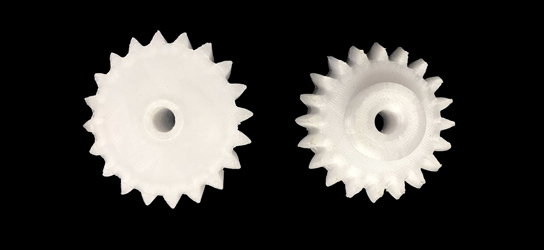
Fused Deposition Modelling (FDM)
Fused Deposition Modeling (FDM) is the most used 3D printing technology due to its accuracy, low cost and wide material selection. It works by extruding thermoplastic material layer-by-layer to create a physical object from a digital 3D model, it’s Cost-effective, Easy to use and maintain, Good for prototyping and low-volume production, Wide material availability.
Accuracy: ±0.2mm
Bed size: 400mm X 400mm X 400mm
Materials includes:
dummy
ABS (Acrylonitrile Butadiene Styrene)
ABS is a plastic material that’s great for mechanical strength and early stage rough prototypes
ASA (Acrylonitirle styrene acrylate)
It is similar to ABS but offers enhanced mechanical properties, better aesthetics, and UV resistance.
Nylon
Nylon exhibits a range of properties, including high strength, toughness, and abrasion resistance, along with good flexibility and chemical resistance.
PC (Polycarbonate)
PC is used for many applications, offering dimensional stability, heat resistance and good impact resistance. It also has a good stiffness, enabling shape retention and it is a tough material suitable for applications requiring durability, even for industrial use or functional testing.
PLA (Poly Lactic Acid
PLA is known for its ease of printing and good surface results. It offers a range of desirable properties, including good printability, high-speed printing capabilities, and a non-toxic, biodegradable nature. It also exhibits good adhesion to the printing platform and dimensional stability of the printed parts
PETG (Polyethylene terephthalate glycol)
PETG is a great option that merges the cost-effectiveness of PLA and functionality of ABS. Although not ideal for aesthetics, this material is known for its impact resistance, warpage resistance, low shrinkage rate and high head deflection temperature
ULTEM (Polyetherimide)
ULTEM have exceptional strength, high heat and chemical resistance. Commonly used in industries requiring strong, durable, and high-temperature-resistant parts.
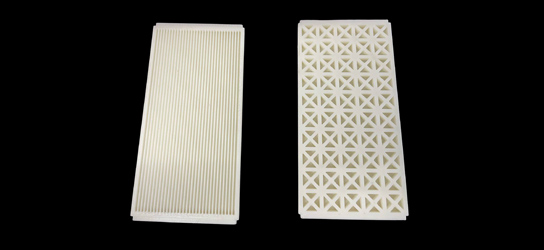
Specific Laser Sintering (SLS)
Specific laser sintering (SLS) is a plastic 3D printing service where durable prototype or functional models are required. It uses a high-powered laser to fuse powdered material (typically nylon, but also other thermoplastics or composites) layer by layer to form a solid object. It has High strength and durability, Excellent design freedom — complex geometries, moving parts, Good mechanical properties — suitable for functional end-use parts, Efficient batch production — multiple parts can be nested in one job.
Accuracy: ±0.1mm
Bed size: 450mm X 450mm X 400mm
Materials includes:
dummy
Nylon
Nylon exhibits a range of properties, including high strength, toughness, and abrasion resistance, along with good flexibility and chemical resistance.
TPU (Thermoplastic Polyurethane)
TPU is a versatile material known for its flexibility, durability, and ability to be processed like a plastic. It combines the properties of rubber and plastic, making it suitable for a wide range of applications.
PP (Polypropylene)
Polypropylene offers high chemical resistance properties. This tough and durable, yet flexible, material resists most acids and is a low weight material option.
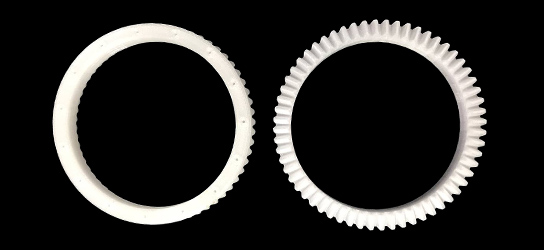
Polyjet
PolyJet is a high-resolution 3D printing technology that works similarly to inkjet printing—but instead of ink, it jets layers of liquid photopolymer onto a build tray and cures them instantly using UV light. It provides the ability to choose a desired hardness or combine material properties into a single build. It has exceptional surface finish and detail, Ability to combine materials and colours in one print, Great for realistic prototypes (texture, transparency, flexibility), Supports complex geometries.
Accuracy: ±0.1mm
Bed size: 350mm X 250mm X 200mm
Materials includes:
dummy
Vero
Vero is a Rigid Opaque photopolymer that provides excellent detail visualization and can be blended with other photopolymers to vary hardness, flexibility, translucency or heat resistance. 3D print smooth, attractive prototypes to test the fit, form, and function of your static parts, moving components or complex assemblies.
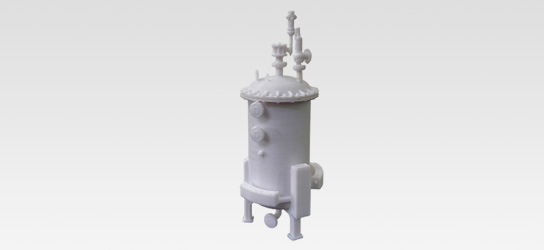
Multi Jet Fusion (MJF)
Multi Jet Fusion (MJF) is a powder-bed fusion 3D printing technology. It’s designed for producing high-quality, functional parts quickly, with excellent detail and mechanical properties—particularly in nylon, It has Excellent part strength and isotropy (uniform properties in all directions), Fast print times — suitable for batch production, High detail resolution and fine surface finish, No support structures needed (loose powder supports the part), Efficient material usage (unused powder is largely reusable).
Accuracy: ±0.2mm
Bed size: 350mm X 350mm X 250mm
Materials includes:
dummy
Nylon
Nylon exhibits a range of properties, including high strength, toughness, and abrasion resistance, along with good flexibility and chemical resistance.
PP (Polypropylene)
Polypropylene offers high chemical resistance properties. This tough and durable, yet flexible, material offers resistance to most acids and is a low weight material option.
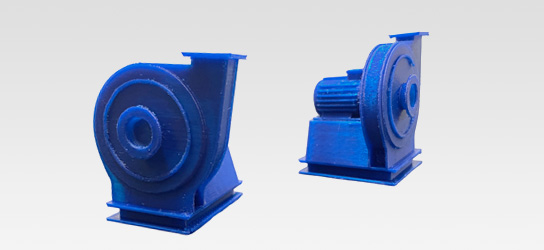
Digital Light Process (DLP)
DLP (Digital Light Processing) is a 3D printing technology used to rapidly produce photopolymer parts. It’s very similar to SLA with one significant difference — where SLA machines use a laser that traces a layer, a DLP machine uses a projected light source to cure the entire layer at once. Its Fast printing: Cures entire layers at once (vs SLA’s laser point-by-point), Very high resolution: Great for intricate details (e.g., dental, jewelry), Smooth surface finish, Reliable and precise for small parts, Compact desktop printers are widely available.
Accuracy: ±0.05mm
Bed size: 100mm X 100mm X 50mm
Materials includes:
dummy
Loctite Resin
Loctite is a photopolymer resin with good impact strength and moderate temperature resistance.
Advantages of Plastic 3D Printing
Plastic 3D printing offers a powerful combination of speed, flexibility, and cost-efficiency. Whether you’re creating prototypes or end-use components, here are the key benefits:
Rapid Turnaround
Quickly go from design to finished part, ideal for iterative development.
Cost-Effective Prototyping
Lower tooling and material costs compared to traditional manufacturing.
Design Flexibility
Create complex geometries, internal features, and organic shapes with ease.
Wide Material Options
Choose from a variety of plastics with different strengths, finishes, and functional properties.
Low-Volume Production Ready
Produce small batches without the need for molds or expensive setup.
Reduced Waste
Additive manufacturing uses only the material needed, minimizing scrap.
From Design to Delivery
Getting your parts manufactured has never been easier. Our streamlined process takes you from design upload to doorstep delivery with speed, precision, and complete transparency.
Upload Your Design
Start by uploading your 3D model or drawing to our secure platform.
Choose Requirements
Select material, technology, and finish for your part.
Get Instant Quote & DFM
Receive pricing and basic manufacturability feedback.
Pay Online
Confirm your order and pay securely through our online system.
Production Begins
We begin manufacturing your parts with precision and care.
Shipping
Your finished parts are packed and shipped directly to your address.
Your Partner in Innovation
TechUrja blends cutting-edge technology with craftsmanship to help bring your ideas to life—efficiently and affordably.
TechUrja
1175 Central Avenue,
University Park, IL, 60484
USA
Our Offices:
• Berlin, Germany
• Trivandrum, India
• Bangalore, India